Native Americans Were Gambling 12,000 Years Ago, Study Finds
According to a recent study published in the journal American Antiquity, humans have been gambling for at least 12,000 years—six thousand more than previously thought.
Researchers have discovered that hunter-gatherer civilizations in the western Great Plains region utilized "dice" during the Ice Age. This shows that thousands of years before Old World nations, Native Americans were experimenting with probability and playing games of chance.
The first dice were previously thought to date to approximately 5,500 years ago and were discovered in locations like Mesopotamia and the Indus Valley.
“Historians have traditionally treated dice and probability as Old-World innovations,” said doctoral researcher in archaeology Alexandre Madden, who led the study.
“What the archaeological record shows is that ancient Native American groups were deliberately making objects designed to produce random outcomes, and using those outcomes in structured games, thousands of years earlier than previously recognized.”
Craps from the prehistoric era?
Madden didn't have to unearth any fresh artifacts. Rather, he examined ones that were already in museum collections in a new way.
He began with a thorough inventory of Native American dice gathered in the early 1900s by anthropologist Stewart Culin, which described the appearance and usage of actual dice.
He then created a sort of checklist, examining features like shape, marks, and whether an object had two distinct sides that were intended to yield random results.
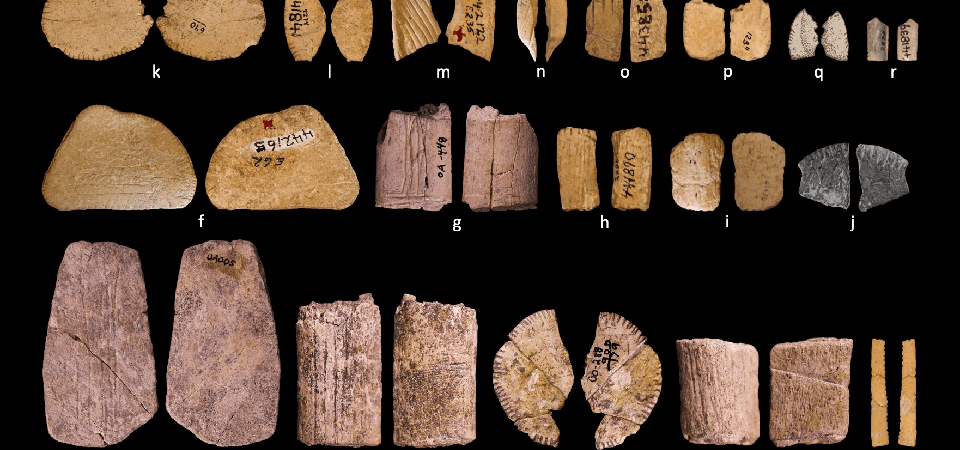
He then used that checklist to examine hundreds of artifacts from western U.S. archaeological sites. He found over 600 items that met the requirements for dice by going through public reports and museum archives.
According to the study, archaeologists had been discovering similar artifacts for decades; they simply lacked a trustworthy method to identify them as equipment for games of chance.This is because they don't resemble the numbered cubes that we know as dice at all.
Rather, they are frequently asymmetrical items with one side marked or flattened, carved sticks, or split animal bones. According to Madden, the crucial aspect is that they are made to land in various directions and result in a random event.
Belief and Chance
Games of chance were strongly associated with social events, storytelling, and common beliefs about fate or luck in many later Indigenous North American civilizations. It's possible that the result of a throw was shaped by invisible factors rather than being entirely random.
“Games of chance and gambling created neutral, rule-governed spaces for ancient Native Americans,” Madden said. “They allowed people from different groups to interact, exchange goods and information, form alliances, and manage uncertainty. In that sense, they functioned as powerful social technologies.”